Contents
Surah Baqarah Verse 3 In English
Surah Baqarah Verse 3 Transliteration & Translation
Transliteration
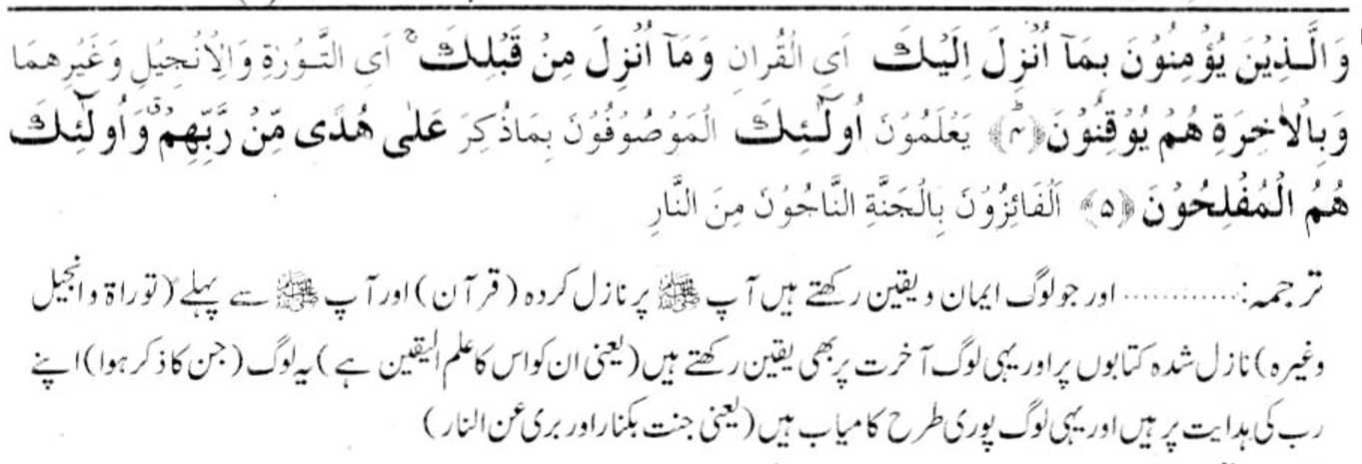
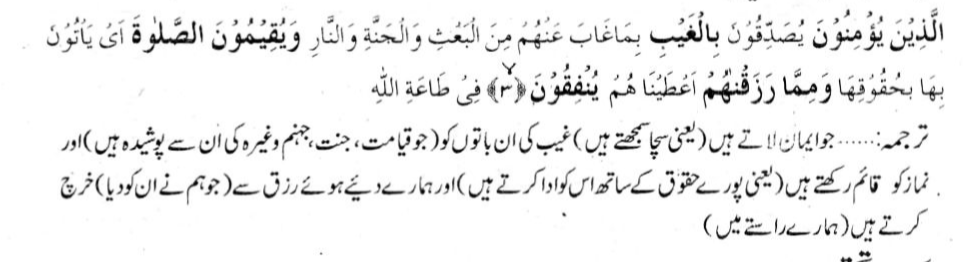
الَّذِينَ يُؤْمِنُونَ بِالْغَيْبِ وَيُقِيمُونَ الصَّلَاةَ وَمِمَّا رَزَقْنَاهُمْ يُنْفِقُونَ
‘Alladheena yu’minoona bil ghaybi wa yuqeemoonaS-Salata wa mimma razaQ’nahum yunfiqoon.’
Translation
‘Those who believe the unseen and establish prayer and spend in our path out of our provided sustenance.‘
Surah Baqarah Verse 3 Explanation
Belief without seeing
Belief Meaning
Belief is not the name of just knowing the truth but it is to have faith and accept its truthfulness whole-heartedly with sincerity. Faith is a different thing and performing deeds is different. Belief in the unseen (yu’minoona bil-ghaybi) refers to having belief in the hidden and unseen things solely because ALLAH and his messenger Mohammad (peace be upon him) said it.
Faith can be of two types
⦁ To have overall faith that whatever the Prophet Mohammad (peace be upon him) brought is true, the entire belief.
⦁ Second is to believe in the detailed meaning of each part.
Meaning of Faith in the unseen (ghaib)
It refers to that hidden thing which a common person cannot feel through any of his sense organs, nor it can come in his brain without any evidence. For example, the taste of food items, fragrance etc cannot be termed as unseen because even though these are invisible but could be felt through sense organs. Similarly, the things detected through man made instruments also do not come under this.
Types of unseen (ghaib)
There are two different kinds in it.
- The one which has proof, i.e., that could be understood through evidences like ALLAH and his attributes, apostleship and the signs of Almighty ALLAH. For example, one could know about the heaven, hell, life after death, angels, Prophets, Attributes of ALLAH and his messengers, the signs of closeness of resurrection day, from the Quranic verses, Ahadith and by observing the creations of Almighty ALLAH. Common people can gain the knowledge of unseen when it is proved from an evidence.
- Second type is the one which does not have evidences. Like what is the exact date of the judgement day, the born baby will be pious or bad etc,. cannot be known from any of the evidences. We do not know about it. But Almighty ALLAH knows it. Almighty ALLAH has the keys to knowledge of all unseen. And he grants the knowledge of unseen from among his messengers as much as he likes. As it is proved from these verses,
“And it does not befit Allah’s Majesty to give you, the common men, knowledge of the hidden, but Allah does choose from His Noble Messengers whomever He wills; so believe in Allah and His Noble Messengers;” Aal e Imran, verse 179
Relation of previous verse’s tafseer with this verse
Few pious Islamic Investigators said, ‘Alladheena yu’minoona bil-ghaybi wa yuqeemoonaS Salaata wa mimmaa razaQ`naahum yunfiqoon‘ is the commentary of muttaqin. It is as follows:
As we came to know in the previous verse that muttaqi is the one who has the strength to abandon the forbidden things of Islam and practice on its commands. Now the deed could either be the deed of the heart i.e,. ‘Alladheena yu’minoona’ that interprets to it; Or deeds done through body parts – and its pillars are namaz, zakat and charity. Because the worshiping deeds could be done through body and in it the utmost deed is salah or through money and in it the utmost deed is the obligatory charity(zakat).
According to Imam Razi, taqwa means to abandon forbidden things. Taqwa (Fear of ALLAH) is mentioned before stating about the deed of heart (faith), salah and obligatory charity (zakat).
Real Salah
With regards to the namaz, instead of saying “yu-addoonaS-Salata (perform namaz)”, “YuqeemoonaS-Salata (Establish namaz)” is stated. It points towards this concept that just performing the namaz is not meant but it refers to performing the salah with all the physical and spiritual manners. It includes carrying out the namaz with complete sunan, recommended acts, sincerity and full attention.
Surah Baqarah ayat 3 In Roman Urdu
Alladheena yu`minoona bil ghayb tarjuma
الَّذِينَ يُؤْمِنُونَ بِالْغَيْبِ وَيُقِيمُونَ الصَّلَاةَ وَمِمَّا رَزَقْنَاهُمْ يُنْفِقُونَ
Alladheena yu`minoona bil ghaybi wa yuqeemoonas-Salata wa mimma razaq’nahum yunfiqoon.
Tarjuma:
Jo imaan laate hain (yani sacha samjhte hain) ghayb ki un baaton ko (jo qayamat, jannat, jahannum waghaira ki unse poshida hain) aur namaz ko qayam rakhte hain (yani poore huqooq ke saath ada karte hain) aur hamare diye huwe rizq se (jo humne unko diya) kharch karte hain (hamare raaste mein).
Ayat 3 Al-baqarah tafseer
Imaan bil ghayb
Imaan
Behar hal Iman sirf sacha jannay ko nahi balke ikhlas ke saath dil se tasdeeq karne (sacha mannay aur samajhnay) ko kehte hain. Imaan ek alahda cheez hai aur amal karna ek dosri baat hai. Aur imaan bil ghaib yeh hai keh aqal wa hawas se poshida aur makhfi baton ko mahez ALLAH aur Rasool ke farmane ki wajeh se sahih maan lena.
Imaan do tarah ka hota hai
⦁ Ek imaan ijmali jaisa keh ayat zeil mein murad hai yani jo kuch Nabi (sallallahu a’laihi wa sallam) le aaye uski tasdeeq kardena aur
⦁ Dosra iman tafseeli keh tamam juziyat ki alag alag tafseeli tasdeeq karna.
Ghaib ki tareef
Ghaib woh chupi huwi cheez hai jisko aam insan na toh aankh, kaan, naak waghaira ya kisi bhi hawas ya aala se mehsoos karsake aur na bila daleel uski aqal mein aasake. Masalan khanon ki lazzatein, khushbuyein, hamare liye ghaib nahi kyunke yeh aankh se chupi huwi hone ke bawajud mehsoos ki jasakti hain. Isi tarah medical testing waghaira mein aala se pehchani huwi cheezein bhi ghaib nahi.
Ghaib ki aqsam
Ek ghayib woh hai keh jispar dalail maujood hon jaise ALLAH ki zaat wa sifat, nabuwwat wa sharaaye. Masalan, Jannat, dozakh, marne ke baad uthaya jana, malaika, ambiya, ALLAH ta’ala ki sifaat, qayamat ki nishaniyan waghaira ke in baaton ka andaza Qurani ayaat, Ahaadith aur is dunya ki cheezein dekhkar pata chalta hai. Jo ghaib daleel se sabit ho uska ilm aam makhlooq ko bhi hojata hai.
Dosra woh ghaib keh ispar koi daleel na ho. Jaise qayamat ka ain waqt ya tareekh ke kab wagay hogi? Aulad neik hogi ya badbakht hogi waghaira Iske mutalliq daleel qayim nahi ki gayi. Iska Ilm hamein hasil nahi, ALLAH hi ko hai. Yeh ayat e karima ‘wa I’ndahu miftah’ul ghayb laa ya’lamuhaa illa hu’ (Aur ALLAH ke paas ghaib ki kunjiyan hain) mein yehi dosri qism murad hai. Aur ALLAH ta’ala apne khas banday jaise ambiya kiram me se jise chahe, jitna chahe ilm e ghaib ata farmata hai jaisa keh is ayat se sabit hai.
“Aur ALLAH ki yeh Shaan nahin hai keh Aye Aam logon tum ko GHAIB ka ILM de, haan ALLAH chun leta hai apne Rasoolon main se jis ko chahe”. (Surah Aal e Imran, ayat 179)
Hudal lil muttaqin ki tafseer is ayat mein
Baaz muhaqqiq ne kaha keh ‘Alladheena yu’minoona bil-ghaybi wa yuqeemoonaS Salaata wa mimmaa razaQ`naahum yunfiqoon’ muttaqin ki tafseer hai. Wo yun keh neikiyan baja laane wala aur burayiyon ka tark karne wala muttaqi hota hai. Ab feil ya toh feil e qalb hai, ‘Alladheena yu’minoona’ isi ka bayan hai ya jawareh ka feil hoga (haath, paon ya badan ke deegar aaza ka) aur iski bunyad namaz, zakat, aur sadaqa hai kyunke ibadat ya toh badani hogi aur inme namaz sabse afzal ya maali hogi aur inme zakat sabse a’ala.
Imam Razi ke mutabiq taqwa yani sharayi namunasib ko tark karna. Taqwa ko feil e imaan, namaz aur zakat par muqaddam kiya hai. Kyunke dil us takhti ki tarah hai jo aqaaid e haqqa aur akhlaq fazila ke nuqoosh qubul karti hai. Aur takhti ke liye awwalan zaruri hota hai keh isay nuqooshe fasida se paak kiya jaaye taakay ispe umda nuqoosh ko sabt kiya jasake. Isi wajeh se tuqwa ko muqaddam kiya jo gair munasib afa’al ka tark hai. Aur uske baad munasib afaal baja laane ka zikr kiya.
Haqeeqi namaz
Aamaal ke silsile mein “yu-addoonaS-Salata” ki bajaye “YuqeemoonaS-Salata” irshad hai. Is nuqte ki taraf ishara hai keh mahez ada e namaz murad nahi hai balke tamam sharait zahiri aur batini aadaab ke saath baja laana murad hai jisme naZeer kamil sunan, mustahabbat ki takmeel, batini aadaab, khushu wa khuzu aur ikhlas sab maujood hain.
Zakat ki haqeeqat
Insan chunkeh bit-tabae bakheel hota hai. Apne gaaDay khoon paseena ki kamayi ka ek paisa bhi kisi ko dena gawara nahi karta. Chamdi chali jaye par damdi par aanch na aaye. Is liye Haq ta’ala ne infaaq e maali ka u’nwaan dilnasheen rakha jisse yeh qurbani aasan hojaye yani yeh hamara (ALLAH ka) hi diya huwa maal jiske infaaq ka hukum diya jaraha hai. Maa ke pait se insan barhana, khali haath aata hai. Lekin agar kasab par ghamand hai toh waqayi kasab bhi ALLAH hi ke diye huwe hain.
Tax mushkil hai ya zakat?
Lekin ek khas qism ke tijarati maal mein se aur woh bhi jabke tamam zaruriyat se saal bhar bacha rahe ek khas miqdar ke baad 2.5 rupaye fee sekaDa lete hain jo hukumat ke aaye din taxon ke muqabalay mein nihayat mamooli miqdar hai. Garz yeh keh is u’nwaan mein sahulat bhi paishe nazar hai aur aitedaal e infaaq ki taleem dena bhi hai keh neik kaam mein kharch karo. Fuzooliyat se bacho aur na itna kharch kar daalo ke kal ko khud mohtaj hokar maangne baith jao.
Iman bil ghaib ki fazeelat
- Bahar haal kisi baat (ya daleel) ko dekhkar ya samajhkar manna utna zyada qabil e tareef kaam nahi jitna keh mahez kisi ke farmane se manna u’mda hai kyunke awwal surat mein toh ek darja mein apni aankh ya samajh par bharosa karna huwa, khalis RasoolALLAH par iman lana yeh hai keh sirf unke kehne se maan le, kisi aur cheez ka intezar na kare. Chunanche Tibrani ne Ibne A’bbas (radiallahu a’nhu) se riwayat ki hai keh ek baar safar mein qafila ke liye peene ka pani tak khatam hogaya tha. Talash kiya toh sirf ek bartan mein qadare pani nikla. Aapne apni ungliyan daal di jinki barkat se woh pani fawwara ki tarah josh marne laga aur tamam majma’ ki jumla zaruriyat ke liye kafi hogaya jinki tadad sekadon thi. Apne sahaba se daryaft farmaya, sabse zyada imaan kin logon ka ajeebtar hai? Arz kiya farishton ka. Aap ne farmaya farishte ALLAH ki bargaah mein hazir rehte hain, uske ahkam ki tameel mein lage rehte hain, wo kaise imaan nahi layenge? Arz kiya phir aap ke aS-haab ka imaan a’jeebtar hai. Aap ne farmaya mere aS-hab bhi sekadon muajzaat khuraaq dekhte rehte hain. Inke imaan mein kya ta’jjub hai? Phir khud hi irshad farmaya keh qabil e ta’jjub un logon ka imaan hoga jinho ne mujhko nahi dekha. Woh mere baad aayenge lekin mere naam sunkar sachay dil se mujhpar imaan laayenge, woh mere bhai hain aur tum mere aS-haab.
- Haarith bin Qais rehmatullahi a’laih ek tabayi ne ek Sahabi se arz kiya keh afsos hum RasoolALLAH ki ziyarat se mehroom reh gaye. A’bdullah Ibne Maso’od ne irshad farmaya keh yeh sahih hai keh tum is khas sharf se mehroom hogaye magar ek badi nemat tumko yeh hasil hogayi keh tum begair dekhe RasoolALLAH par imaan larahe ho. Jisne apko daikh liya uspar hazar dalail se apki nabuwwat raushan hogayi. Phir bhi who imaan nahi laayega toh kya karega? (Qabil e tareef) Imaan tumhara hai keh begair dekhe imaan laaye ho.
- Abu Dawood ki riwayat hai keh ek shaks A’bdullah Ibne Umar ki khidmat mein hazir huwa aur kehne laga keh kya apne RasoolALLAH ko apni aankhon se dekha hai? Aur apni zuban se apke saath baat ki hai? Aur apne haathon se apke dast Mubarak par baia’t ki hai? Inhone sab baaton ke jawab mein farmaya haan. Yeh sunkar woh ronay lage. A’bdullah bin Umar ne farmaya mai tumko ek khushkhabri sunata hun jo An Hazrat se maine suni hai. Apne farmaya ke jisne mujhko dekhkar imaan qubul kiya uske liye khush haali hai aur jo bila dekhe imaan laya uske liye bohat zyada khush haali hai. In aasaar wa riwayaat se maloom hota hai keh imaan bil ghaib ki badi qadr o qeemat hai.