

Contents
Interrogative particles and pronouns are used to form questions.
Interrogative Particles
أَ and هَلArabic Interrogative Particles
These are interrogative particles and not nouns. They require a complete sentence following these particles to give meaning of the sentence. These are yes or no questions asked to confirm about something. They always come in the beginning of a sentence.
e.g,. هل تعمل؟ – Do you work?
أَ تحب الشاي؟ – Do you like tea?
Interrogative Pronouns
These are pronouns used to ask questions of unknown matter about some person, place or thing. These are indeclinable and do not change their form and pronunciation, due to presence of the worker. They always come in the beginning of a sentence.
- مَا = What,مَا ذَا = What – These are used to ask questions about a thing or that which does not have intellect like animals. مَا هَذَا is usually used before a verb.
- For example, ? مَا هَذَا ? ماذا تريد ? لِمَاذَا = Whyلِمَهْ = Why
- مَنْ = Who? This is used to ask questions about a person whether it is a subject or an object. e.g., مَنْ هِيَ؟ , قَلَمُ مَنْ هَذَا ؟
Some Important Points:
- In Arabic language, there is no word corresponding to English to be verb, “is”. Looking at the sentence, if it is a complete sentence the word “is” is added during the translation.
- There is no word corresponding to English indefinite article “a” or “an“. It is determined by the tanween symbol which is an indicator of indefinite article as we already studied this point in our previous lesson.
- The particle أَ placed at the beginning of the sentence changes it to a question.
Lesson 3
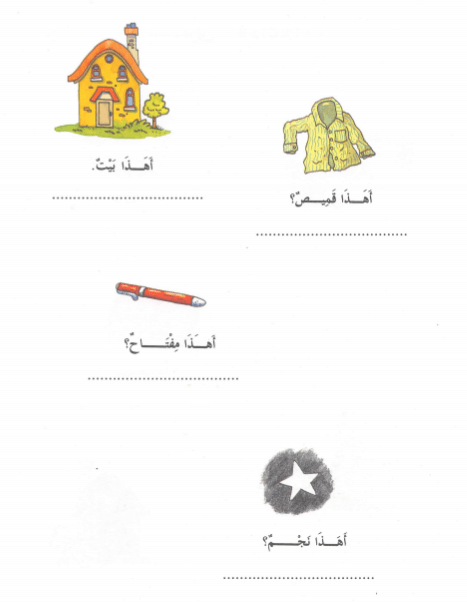
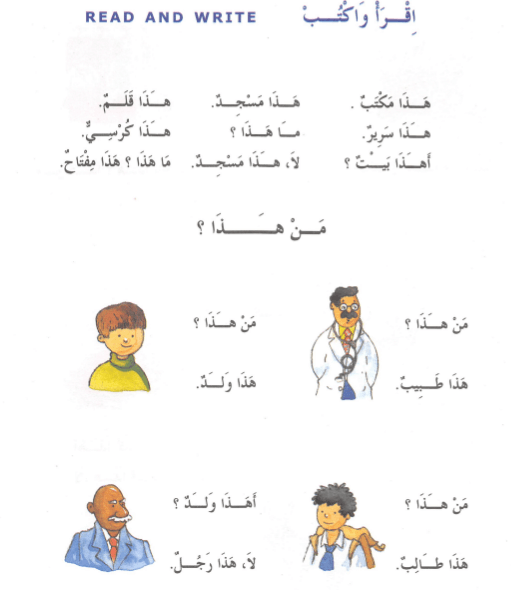
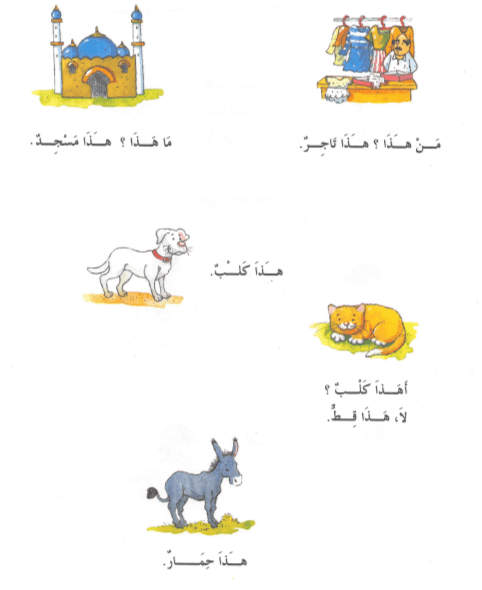
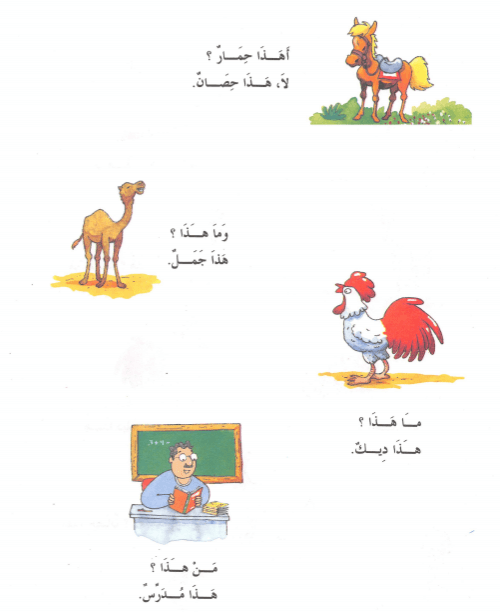
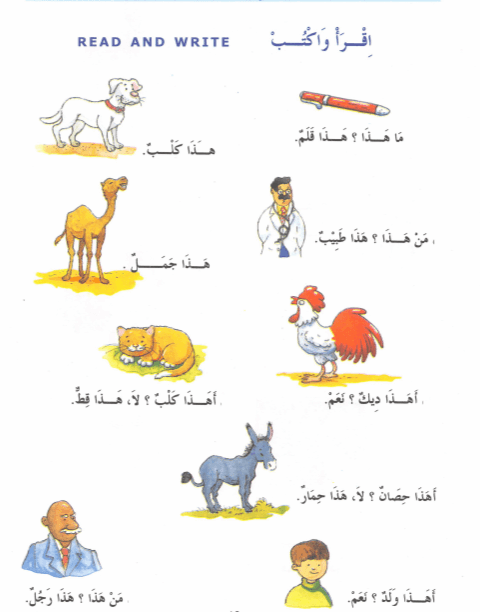
In this lesson you will be learning, مَا هَذَا ؟, its positive, negative answers. مَنْ هَذَا ؟ . its positive, negative answer sentences.

كَيْفَ = How
أَيْنَ = Where
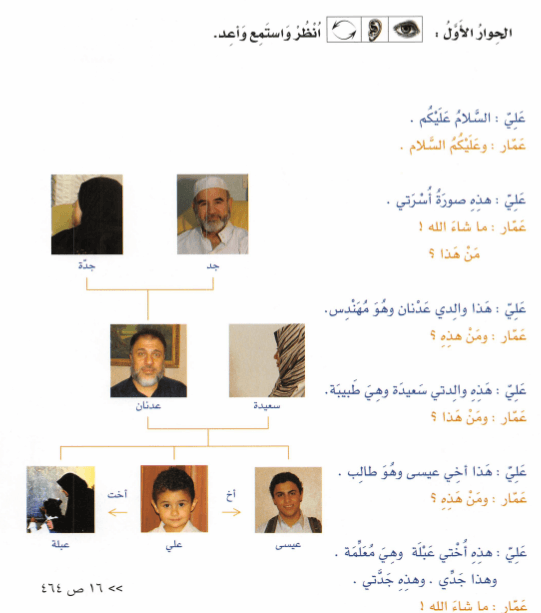
Dialogue 1 Greetings & Introduction
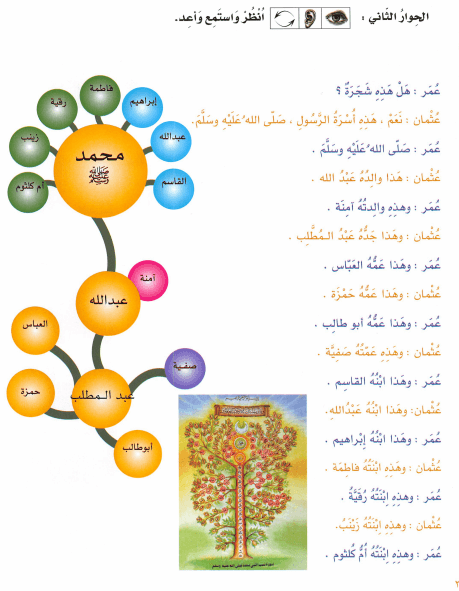
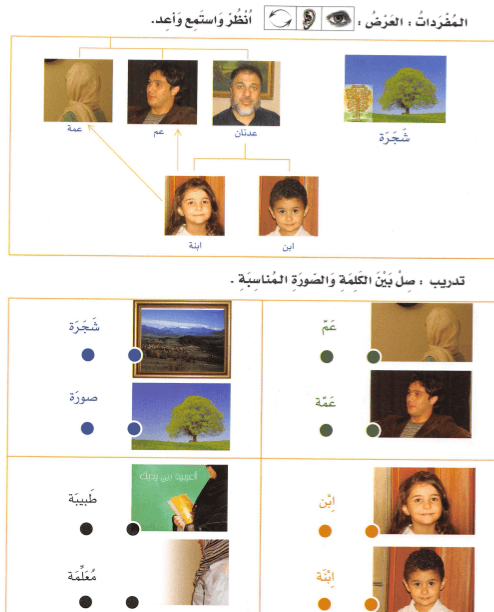
Dialogue 2 Family


أَيْنَ = Where
لِمَنْ = Whose (For whom?, For which?)
مَتَى = When
أَيُّ + Which
أَيُّ in a sentence is acting as mudhaf, therefore noun after أَيُّ is mudhaf ilaih and majruur.
أَيَّ كِتَابٍ تَقْرَأُ؟
Why أَيُّ becomes أَيَّ ? Because in this sentence it is acting as an object (maf’ul), so the case is mansuub.
كَمْ = How much كَمْ بَيْتًا عِنْدَكَ
بِمَ = with what بِمَ تَكْتُبُ؟
لِمَ = for what لِمَ تَدْرُسُ
مِمَّنْ = from whom مِمَّنْ سَمِعْتَ الْخَبَرَ؟
مَعَ مَنْ = with whom
مَعَ مَنْ تَذْهَبُ إِلَى الْمَدْرَسَةِ؟
عَمَّ = about what
عَمَّ يَتَسَاءَلُوْنَ؟